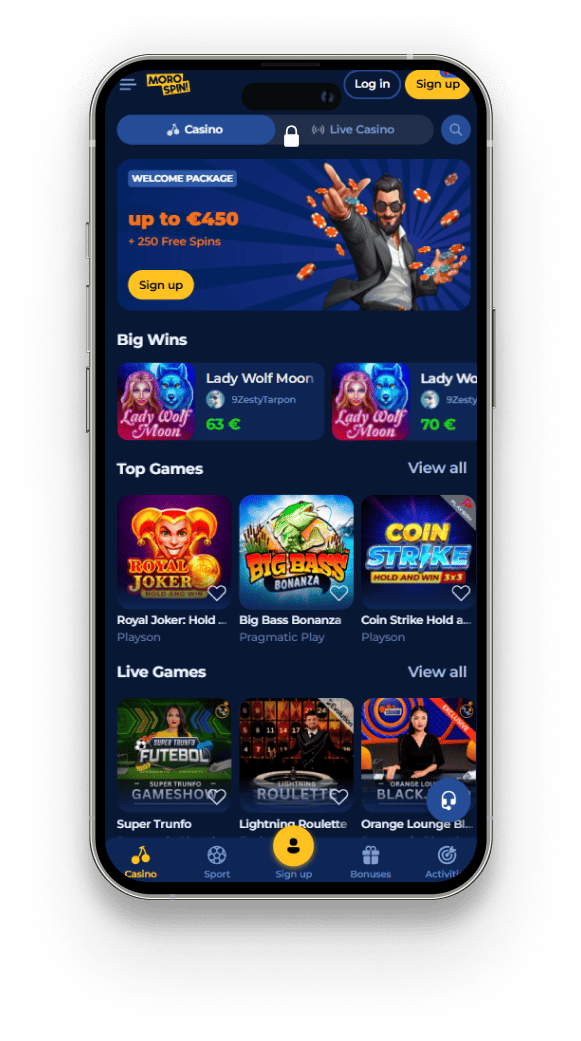
Players often tell us gambling has occupied more space than they planned https://morospincanada.ca/fr-ca/jeu-responsable/. Seeing that clearly is not weakness. It is a moment of clarity that deserves a structured response. At Morospin Casino, our responsible gambling tools enable you to take control before things worsen, and the cooling off period is one of the most helpful but poorly understood options. Unlike permanent self-exclusion, a cooling off period is a short pause, usually from twenty-four hours to several weeks. You deliberately suspend your account. You cannot deposit, wager, or claim promotions, though you may still withdraw existing balances depending on your jurisdiction and our terms. The point is a compulsory stop that breaks harmful patterns, calms your emotions, and gives back the mental space you need to make sound decisions about your leisure budget. Before you activate this, you need context so the break effectively serves its purpose instead of turning into a box you tick without changing your behavior.
Identifying When a Break Period Is Not Enough
Indicators That Point to a Need for Stronger Intervention
We have to be direct about a reality some players ignore. Cooling off periods are meant for people who still maintain a degree of mastery over their gambling impulses. If you find that the break didn’t do much to change your fundamental relationship with wagering, a more decisive solution is required. A solitary cooling off period can be a effective reset, but when used repeatedly without progress, it becomes a trap that postpones necessary action. Pay attention to how you were during the break and immediately after reactivation. We have seen players view cooling off as a way to temporarily appease concerned loved ones while waiting to resume gambling, and that weakens the tool’s purpose. Honest self-reflection is crucial. Watch for these warning signs:
- Initiating the break repeatedly in quick succession without lasting change.
- Feeling intense cravings that do not diminish even after weeks of abstinence.
- Lying to family members about the break or about gambling activity after reactivation.
- Immediately depositing larger amounts than before in an bid to compensate for the forced break.
- Marking the days until the cooling off period ends with compulsive focus.
- Opening accounts with other operators to circumvent the Morospin Casino lock.
If any of these seem familiar, temporary measures are not meeting the severity of the issue. Self-exclusion, either through our platform or through a national register where available, becomes the right next step. This longer-term barrier removes the temptation entirely and gives you space to seek professional help. We also advise you to consider contacting a problem gambling helpline or a therapist who concentrates on behavioral addictions. The cooling off period has fulfilled its diagnostic purpose by uncovering the depth of the dependency, even if it did not resolve it. Taking that insight seriously can be the turning point toward sustained recovery. Many players find that acknowledging the need for stronger intervention is the hardest step, but it is also the most bold. The resources below can put you in touch with you with support beyond our platform.
Accessing External Support Resources
We sustain relationships with several international organizations that provide free, confidential support for gambling-related harm, and we encourage you to get in touch with them whether or not you keep playing with us. Services such as GamCare, Gambling Therapy, and local helplines provide one-on-one counseling, group support sessions, and practical tools for managing finances damaged by gambling. Many run live chat and phone lines twenty-four hours a day, so you can speak with a trained advisor during moments of acute crisis without waiting for a scheduled appointment. They can also aid family members affected by your gambling, an often-overlooked part of the harm. Using a cooling off period as a bridge to professional support is one of the most positive outcomes we see, because it turns a temporary pause into the start of a sustained recovery journey that extends far beyond our platform.

The Cognitive Reset That Makes Cooling Off Valuable
When we talk about the advantages of a temporary break, we are referring to a neural mechanism many players overlook. Constant gambling, especially during losing streaks or emotional peaks, triggers a dopamine loop. The expectation of a win releases the compound no matter the outcome. A cooling off period interrupts that loop by maintaining the trigger away for a longer duration, allowing brain chemistry to drift back toward baseline. During the opening 48 hours, unease, impulses to check scores, and irritation are typical. These are detox signs from the action, not proof that the break was a misstep. Many players read that unease as a justification to end the break, which they are not allowed to do. Regarding the reset as a bodily process transforms it from a inactive limitation into an proactive healing instrument. By day three or four, the obsessive inner noise often quiets, and you begin to see hobbies and habits that gambling had pushed aside, from family meals to physical activity or artistic pursuits.
How a Temporary Break Differs from Permanent Self-Exclusion
A lot of players mix up cooling off periods with permanent self-exclusion, but they fulfill different roles. A cooling off period is a temporary circuit breaker for someone who plans to return to controlled gambling after reflection. Permanent self-exclusion is a long-term or indefinite ban for people who understand gambling as a fundamental risk with no safe return. At Morospin Casino, a cooling off period concludes automatically, and you regain full access without any assessment. That convenience comes with risk. Without new limits or an recognition of your triggers, you could relapse within hours. Permanent self-exclusion involves a formal reactivation process with cooling off extensions and documentary checks, and that friction deters impulsive returns. Be candid about your patterns before you choose. Mistaking a need for permanent separation as a temporary issue can postpone the serious intervention you really need.
Managing the Break: Setting and Feelings
Clearing Cues and Distractions
Enabling the cooling off period on your Morospin Casino account is a necessary first step, but it functions far better when you also change your environment to lessen exposure to gambling cues during the break. We suggest a systematic trigger audit in the hours before you hit the activation button. Gambling cues are everywhere, from app icons to promotional emails to sports commentary, and they can keep the dopamine loop alive while you are trying to interrupt it. Even harmless reminders, like a betting app notification or a social media post about odds, can spark cravings that create pressure toward the moment your break ends. Taking charge of your digital and physical surroundings before the lock engages means you are not fighting temptation the whole time. The following actions establish a cleaner environment that supports your reset.
- Uninstall all gambling apps from your smartphone, even apps for operators you do not currently use, because app icons create visual cues that maintain the dopamine loop.
- Opt out from affiliate marketing emails, tipster newsletters, and social media accounts that post betting content to prevent FOMO that builds pressure toward the end of the break.
- If you watch sports, mute commentators who discuss odds or avoid pre-game shows that frame events through a betting lens.
- Clear saved payment methods from your browser and devices to add friction if you seek to access other gambling sites.
Occupying the Void with Planned Alternative Activities
The primary reason self-exclusion periods feel unbearable is that gamblers create a vacuum in which gambling used to occupy their mental space and attention. Without a plan, the hours formerly dedicated to wagering become a breeding ground for boredom and urges. We advise writing down at least five concrete tasks you will pursue during the break, optimally things that occupy your hands and mind at the same time ensuring passive scrolling does not guide you back to gambling-adjacent content. The activities should feel satisfying enough to give you a feeling of achievement, which aids reshape the brain’s reward system away from the quick hits of gambling. Schedule these activities in advance, and you establish a structure that takes the place of the routine of logging in and placing bets. This proactive approach turns the break from a pause skysports.com into an opportunity for self-improvement. Explore these options:
- Redesign a room in your home or take on a DIY project that needs focus.
- Begin a book you have put off or join a local book club.
- Join a recreational sports league rather than betting on one.
- Master to cook a complex dish from scratch, involving your senses and patience.
- Take long walks without headphones to let your mind process underlying stress.
Handling the Emotional Discomfort That Surfaces
Once the pause period starts and the interruption of wagering is eliminated, many players encounter a wave of emotions that gambling was repressing. Boredom, unease, solitude, or embarrassment often rise to the surface within the first few days because the activity that dulled those feelings is suddenly unavailable. We want you to view this as a standard and even constructive phase, not a catastrophe. Tedium is not your foe. It shows that your brain is adjusting its stimulation threshold, which gambling artificially inflated. When you endure boredom instead of fleeing from it, your tolerance for regular, lower-intensity pleasures progressively rebuilds. Pursuits like dialogue, browsing, or gentle exercise start to feel satisfying again. Anxiety may come from the awareness that your gambling losses have created genuine financial pressure that you now have to face without the false hope of recovering it. That confrontation is difficult but essential, and we advise you to utilize the cooling off window to create a realistic debt repayment plan or talk to a financial counselor instead of resorting to gambling as a frantic solution. If the emotional distress seems overwhelming, the resources we detail below can connect you with professionals who specialize in gambling-related mental health support.
Grasping the Core Mechanism of a Cooling Off Period
The cooldown period is a preset, permanent time-out on your Morospin Casino account for the period you pick. Once you approve it, the system disconnects you of every login, blocks any try to log in, and ceases all marketing communications, such as bonuses, SMS warnings, and emails. The back-end handles the state as a enforceable agreement. Our support team is not able to lift the ban before the chosen time expires, even if you claim you have regained mastery. That strictness is intentional and defensive. It seals the psychological gap that problem behavior uses, the quiet thought that says one small transaction will recover yesterday’s loss. The operational lock applies across our site and mobile platforms, so moving hardware or deleting cookies will not get you around it. Realizing the break cannot be reversed obliges you to face it immediately, which pushes you toward other activities during the idle period instead of counting the time until you can gamble again.
What to Review Before Your Account Reactivates
As the cooling off period approaches its conclusion, you step into a decision window that decides whether the break brings about lasting change or transforms into a temporary pause before relapse. Do not wait until the moment of reactivation to consider next steps. Use the final days to perform a structured self-assessment. Ask yourself candidly whether the urge to gamble has declined to a manageable level or has just been suppressed by the forced lock and is prepared to surge back. Review your financial records from the period before the break. Calculate exactly how much money you did not lose to gambling during the cooling off weeks and match that figure to what you spent on alternative activities. That concrete number often provides the motivational shock necessary to set stricter deposit limits when you return. Reflect on which triggers remain unresolved and which new habits you have effectively built. If you found that evening hours between eight and ten were the hardest, plan a recurring non-gambling activity for that slot going forward. If the break showed that your gambling was mainly driven by loneliness, think about whether you are willing to address the root cause through social connection instead of continuing to treat the symptom with wagers.
Setting Up Your Interruption: Duration and Account Information
Tailoring the Duration to Your Gambling Behavior
Picking the correct period counts, and we have seen that users who match the timeframe to their own behavioral pattern get far superior effects than gamblers who pick an arbitrary figure of days. If your compulsive gambling concentrates around salary weekends, a 72-hour pause covering Friday through Monday morning can cut the reflexive association between income hitting your balance and betting. For daily gamblers, a lengthier span of two to four weeks is generally essential because a entrenched behavior needs more time to fade and to be replaced by different habits. Gamblers who have severe but sporadic sprees, like a monthly bout that clears disposable funds, benefit from a specific cool-down window that compels contemplation immediately after they notice the episode. That approach prevents after-binge hopelessness from driving them into more impulsive actions.
Considering Life Situations When Determining the Duration
Outside pressures shape gambling impulses, so factor upcoming life events into your duration calculation. If you are entering a high-stress period, such as a job transition, relationship difficulty, or holiday loneliness, extend the cooling off window to cover that entire vulnerable stretch. That keeps gambling from becoming a maladaptive coping mechanism. A two-week break that ends the day before a stressful event is far less protective than a four-week break that carries you through the event and into a calmer period, when your decision-making faculties have recovered. We often see players set a break to expire right before a known trigger, only to relapse immediately. Adding an extra week can make the difference between a genuine reset and a temporary pause. The key principle is that the duration should outlast the acute impulse wave, not merely pause it.
What Takes Place to Your Account and Funds
Money anxieties often prevent players from starting a break, so let’s be frank about how this works. When you trigger the cooling off timer, any outstanding bets that finish before the timer starts are settled normally, and winnings are awarded. Active bonuses with wagering requirements continue to tick according to their original expiry schedule. A bonus may lapse during your break if its deadline occurs inside the cooling off window. We do not stop bonus timers, so examine active promotions before activating and accept that losing a bonus is sometimes the trade-off of prioritizing your mental health. Your account balance remains intact and can usually be cashed out during the cooling off period through our standard withdrawal process, which remains accessible even while the wagering front-end is locked. Loyalty points, tier status, and accumulated comps are preserved and will be exactly as you had them when the period ends.
Gaining insights from the Cooling Off Experience to Develop Long-Term Control
Every cooling off period offers personal insights you can employ to create a sustainable gambling pattern. We prompt you to keep a simple private journal during your break. Note the times of day when cravings peaked, the emotional states that led to the urge to gamble, and the activities that successfully diverted you. Going over this record after reactivation helps you recognize patterns that were invisible when you were caught inside the cycle. Perhaps you will see that arguments with a partner reliably set off a desire to escape into wagering, or that boredom on Sunday afternoons was the single highest-risk window of your week. Armed with that knowledge, you can make precise, pre-planned adjustments. You could schedule a regular social activity on Sunday afternoons, or concur with your partner on a communication practice that tackles conflict without pushing either of you toward harmful coping. Utilized deliberately, the cooling off period becomes a diagnostic instrument and training ground for self-regulation, making gambling a safe entertainment choice rather than a source of harm. We created this tool because we believe informed players who comprehend their own limits are the foundation of a healthy gaming environment, and we continuously refine our responsible gambling features based on the feedback and outcomes we witness.
Re-entering Safely and Setting New Limits
The moment your cooling off period expires and your account automatically becomes active, you encounter a choice. You can log in right away, or you can first put in place the safeguards the break gave you to plan. We strongly recommend the second approach. Before making a single wager, open the responsible gambling section and configure a deposit limit that matches what you discovered about your finances during the time away. If you were depositing five hundred per week before the break and your analysis showed that two hundred would have been a comfortable entertainment expense, lock in the lower figure immediately so impulse cannot overrule intention. Consider activating a reality check timer that alerts you with a pop-up notification after a set duration of continuous play, telling you how long you have been active and asking whether you want to continue. The timer disrupts the autopilot trance that allows hours of unchecked wagering. You may also want to establish a session loss limit that automatically blocks access when you have lost a pre-defined amount within a single day, preventing the chase behavior that often leads to the need for another cooling off period. The goal is to layer several protective mechanisms so your willpower is not the only barrier between recreational play and harmful overuse.